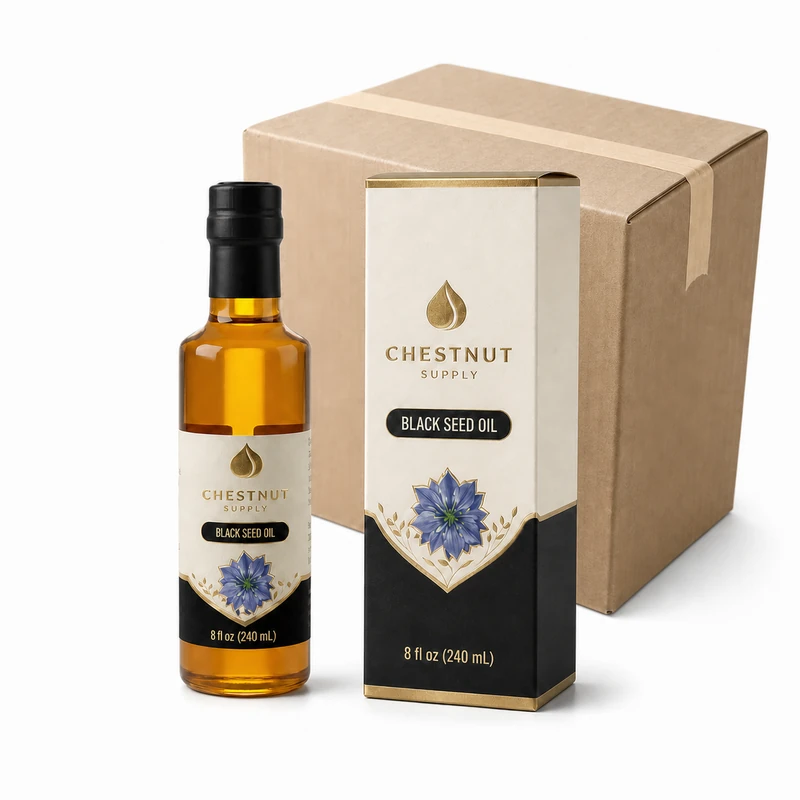
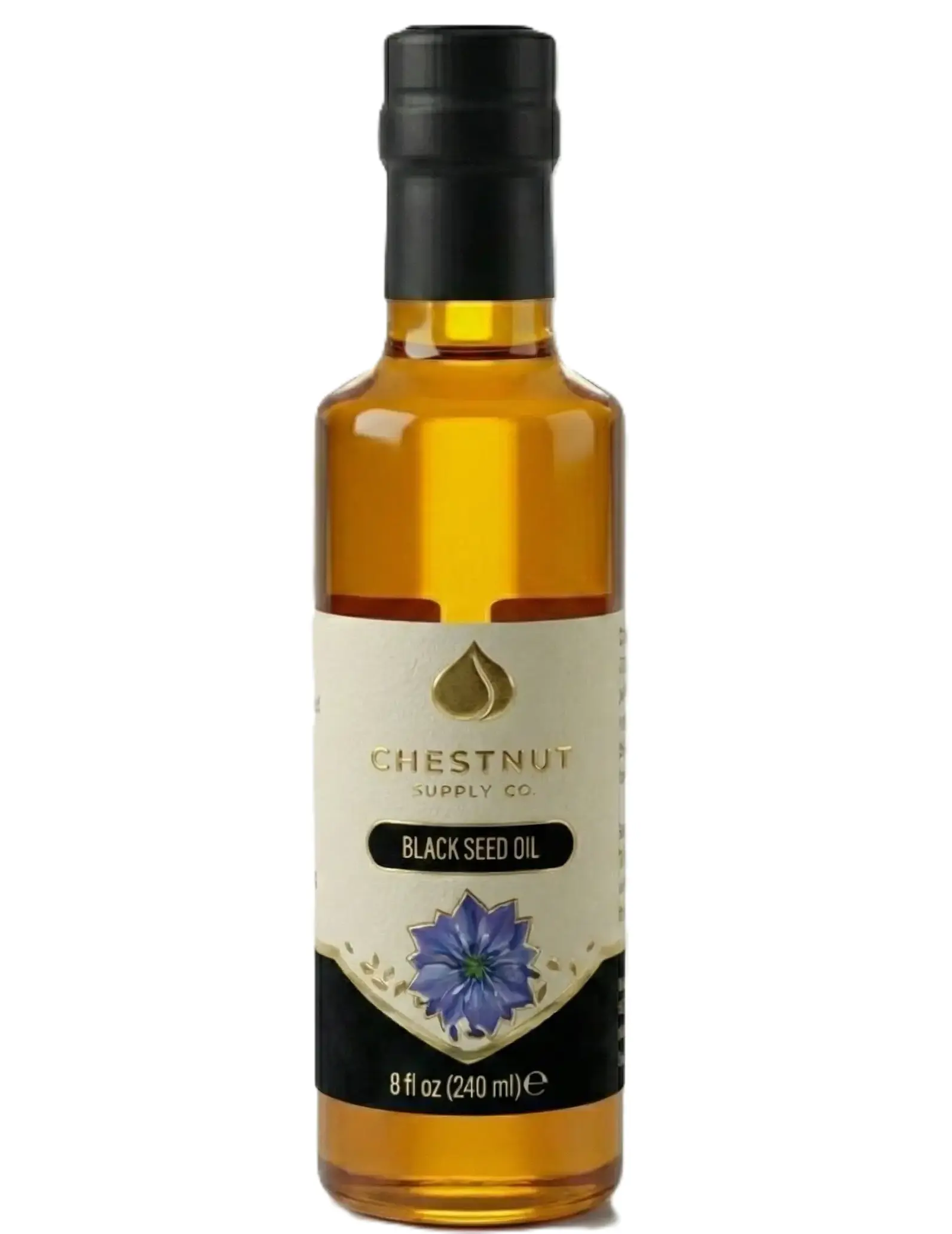
Black seed oil (Nigella sativa, also called black cumin or kalonji) is sold in two main formats: as a liquid oil and as softgel capsules. Both contain the same oil. The difference is not what is inside — it is how much you can verify, how much it costs per serving, how fresh it stays, and how convenient it is to take. This guide compares the two honestly so you can decide which fits you. It is general information for buyers, not medical advice — talk to a healthcare professional before adding any supplement to your routine.
Liquid vs Capsules: Quick Comparison
| Factor | Liquid Oil | Capsules |
|---|---|---|
| Thymoquinone (TQ) shown | Often verifiable with a COA per lot | Rarely disclosed on the label |
| Cost per serving | Usually lower | Usually higher (you pay for the shell) |
| Dose flexibility | Adjustable by the drop or spoon | Fixed per capsule |
| Taste | Strong, peppery — not for everyone | Tasteless — easy to swallow |
| Freshness control | You see and smell the oil | Sealed — harder to judge |
| Topical / culinary use | Yes — skin, hair, food | No — oral only |
| Convenience / travel | Needs a spoon; can leak | Portable and mess-free |
Potency: Why Liquid Lets You Verify Thymoquinone
Thymoquinone (TQ) is the compound most buyers use to judge black seed oil quality. With a quality liquid oil, the supplier can provide a lot-specific Certificate of Analysis (COA) showing the actual TQ percentage for the batch you receive. Thymoquinone content is lot-specific, so the current batch COA is the figure that matters. With most capsules, the TQ level is simply not printed on the bottle, and a softgel can hide an oil that was heat-processed or diluted. If knowing what you are actually getting matters to you, liquid is the more transparent format.
Cost Per Serving
Capsules cost more to manufacture because you are also paying for the gelatin or vegetarian shell, the encapsulation process, and a bottle that holds a small volume of oil. The same quantity of oil in liquid form is almost always cheaper per serving. If you take black seed oil regularly, liquid stretches your budget further.
Freshness and Oxidation
Black seed oil is a cold-pressed oil, and like any fresh oil it can oxidize over time. With liquid, you can see the color and smell the aroma to judge freshness, and a good bottle protects the oil from light. With capsules, the oil is sealed inside a shell, so you cannot inspect it — you are trusting the manufacturing date alone. Buying a cold-pressed liquid from a supplier who dates and documents each lot gives you more control over freshness.
Taste and Convenience: Where Capsules Win
To be fair to capsules: they have real advantages. Black seed oil has a strong, peppery, slightly bitter taste that some people genuinely dislike, and a capsule removes that completely. Capsules are also easier to travel with, give an exact fixed amount every time, and will not spill in a bag. If taste is the thing stopping you, capsules solve it — and some people keep capsules for travel and a liquid bottle for home.
The trade-off is everything in the sections above: less transparency on potency, higher cost per serving, no way to inspect freshness, and no topical or culinary use.
Which Should You Choose?
- •Choose liquid if you want verifiable thymoquinone, the lowest cost per serving, the ability to adjust the amount, and the option to use it on skin and hair or in food.
- •Choose capsules if the taste is a dealbreaker, you need maximum portability, or you want a fixed amount with zero measuring.
We focus on cold-pressed liquid Turkish black seed oil because it is the format where we can prove quality — single-origin, with a lot-specific COA available on request reporting the thymoquinone result for that batch, stocked in our Norcross, Georgia warehouse for fast U.S. delivery — see what we hold in US stock. If you have been taking capsules and want to see the actual oil and its documentation, the liquid is an easy switch.