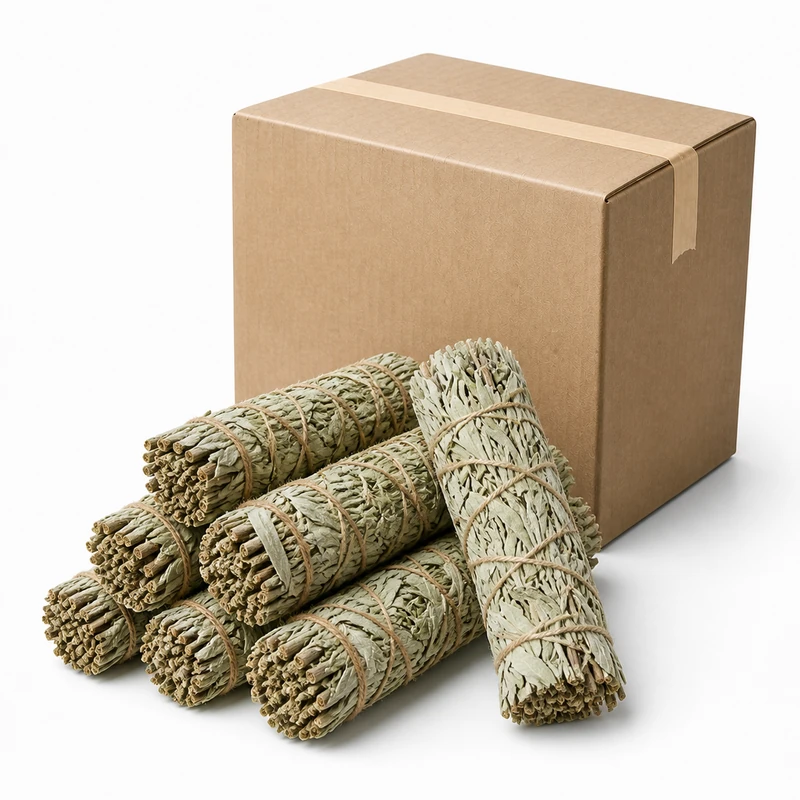
White sage and Palo Santo are the two most popular smudging materials in the wellness and spiritual practice market. Walk into any metaphysical shop, yoga studio, or wellness retailer, and you will find both. But despite being sold side by side, they are very different in origin, aroma, purpose, and the way they burn.
This guide provides an honest comparison to help you choose the right one for your practice — or decide if you want both. Browse our full Smudge Sticks collection to see all seven varieties we carry.
Quick Overview
| Feature | White Sage | Palo Santo |
|---|---|---|
| Botanical Name | Salvia apiana | Bursera graveolens |
| Origin | Southwestern USA & Mexico | South America (Ecuador, Peru) |
| Plant Type | Herb (leaves) | Wood (tree) |
| Form | Bundled smudge stick | Individual sticks |
| Aroma | Strong, herbaceous, pungent | Sweet, warm, slightly citrusy |
| Smoke Volume | Heavy, dense smoke | Light, delicate smoke |
| Burn Time | Several minutes per use | 30–60 seconds per light |
| Traditional Purpose | Cleansing, purification | Inviting positive energy |
Origins & Cultural Background
White Sage
White sage (Salvia apiana) is native to the coastal sage scrub ecosystem of Southern California and Baja Mexico. It has deep roots in Indigenous American traditions, particularly among the Chumash, Cahuilla, and other Native peoples of the region, where it has been used ceremonially for centuries as a purification herb.
In modern wellness culture, white sage has become the most widely recognized smudging material. It is used for “space clearing” — the practice of burning sage to cleanse a room, home, or personal energy field of unwanted or stagnant energy.
Palo Santo
Palo Santo (“holy wood”) comes from the Bursera graveolens tree native to the dry tropical forests of Ecuador, Peru, and other South American countries. It holds sacred significance in Andean and Amazonian spiritual traditions, where it has been used by shamans and healers for centuries.
A key characteristic of Palo Santo is that the wood must come from naturally fallen trees that have been dead for 4–10 years. During this natural aging process, the wood develops its distinctive aromatic compounds. Live trees do not produce the same scent or resin content.
Aroma & Burn Characteristics
White Sage
White sage produces a strong, herbaceous, slightly bitter aroma that is immediately recognizable. The smoke is dense and heavy — a single smudge stick produces significant smoke volume. This makes it highly effective for space clearing but can be overwhelming in small rooms or for people sensitive to strong scents.
Sage smudge sticks are reusable — light the tip, let it smolder, then extinguish it when done. A single stick can be used multiple times over weeks or months.
Palo Santo
Palo Santo produces a sweet, warm, woody aroma with notes of citrus, mint, and pine. The scent is often described as “uplifting” or “grounding” — noticeably softer and more pleasant than sage to most people. The smoke is light and delicate, dissipating quickly.
Palo Santo sticks burn for about 30–60 seconds before self-extinguishing. You can relight the same stick many times. Each stick typically lasts through 15–20+ uses.
Traditional Purpose & Modern Use
While both are used in smudging practices, they serve different energetic purposes in traditional use:
- White Sage = Clearing: Used to remove negative or stagnant energy. Think of it as an energetic deep clean. Traditionally used before ceremonies, when moving into a new space, or after conflict or illness.
- Palo Santo = Inviting: Used to invite positive energy, creativity, and good fortune. Think of it as setting a welcoming, warm atmosphere. Traditionally used during meditation, creative work, and daily rituals.
Many practitioners use both in sequence: sage first to clear, then Palo Santo to invite positive energy into the cleansed space. This “clear and fill” approach is one of the most common modern smudging practices.