
If you have browsed smudge stick collections, you may have noticed bundles with a distinctive reddish tint labeled “Dragon’s Blood Sage.” The name is dramatic, but what exactly is it? Is it a different species of sage? A synthetic product? Something mystical?
The answer is simpler — and more interesting — than you might expect. Dragon’s blood sage is a combination of traditional white sage and an ancient tree resin with its own fascinating history. This guide covers everything you need to know. See all varieties in our Smudge Sticks collection.
What Is Dragon’s Blood Sage?
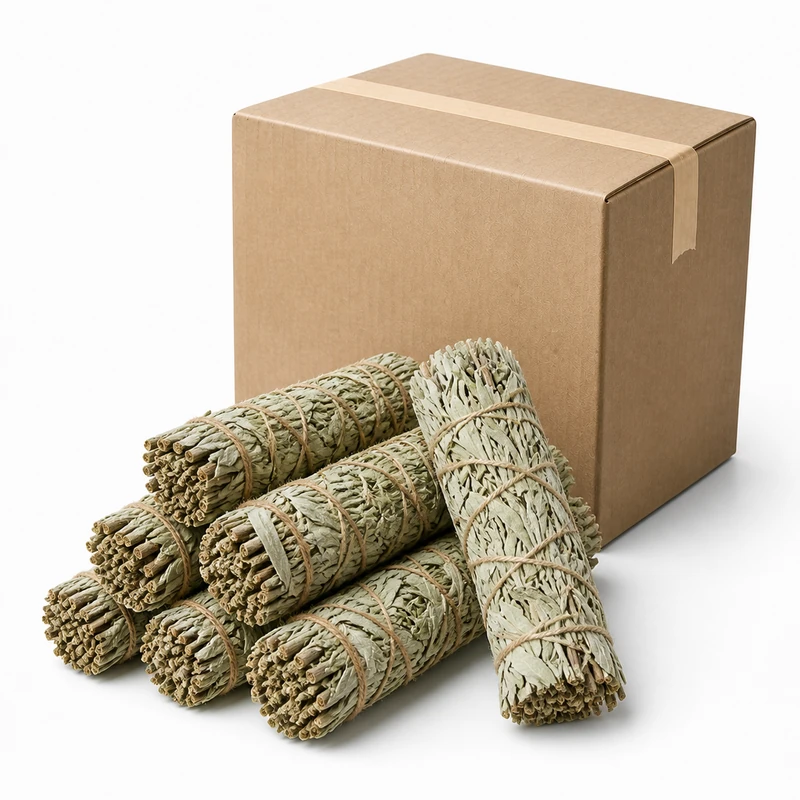
Dragon’s blood sage is a smudge stick made from white sage (Salvia apiana) that has been infused or coated with dragon’s blood resin. It is not a separate plant species — it is regular white sage enhanced with a natural tree resin.
The resin gives the sage bundle its distinctive reddish-brown color and adds a deeper, sweeter, more complex aroma to the smoke when burned. The combination creates a richer smudging experience than plain white sage alone.
About Dragon’s Blood Resin
Despite its mythical-sounding name, dragon’s blood is a completely natural substance. It is a deep red resin harvested from several species of trees, primarily:
- Daemonorops species — Rattan palms native to Southeast Asia (Indonesia, Malaysia). This is the most common commercial source.
- Dracaena species — Dragon trees found in the Canary Islands, Morocco, and Socotra Island. The iconic Dracaena draco is the most famous.
- Croton lechleri — Known as “sangre de grado” in South America, though this is technically a different product with different properties.
Historical Use of Dragon’s Blood
Dragon’s blood resin has been used by humans for thousands of years:
- Ancient Rome — Used as a dye, medicine, and incense. Roman gladiators reportedly used it as a wound treatment.
- Traditional Chinese medicine — Known as xue jie, used in various traditional preparations.
- Medieval Europe — Used in alchemy, ritual practices, and as a varnish pigment. Stradivarius violins are believed to have been finished with dragon’s blood varnish.
- Indigenous cultures — Various cultures across Southeast Asia, South America, and Africa have used dragon’s blood resin in spiritual and medicinal practices.
The name “dragon’s blood” comes from the resin’s deep crimson color, which ancient peoples associated with the blood of dragons. The mythology varies by culture, but the vivid red color made this connection irresistible across civilizations.
Benefits & Uses of Dragon’s Blood Sage
Enhanced Aroma
The addition of dragon’s blood resin transforms the sage’s aroma profile. Plain white sage has a sharp, pungent, earthy smell. Dragon’s blood adds:
- A warm, sweet undertone
- A slightly spicy, amber-like depth
- A richer, more complex smoke that many people find more pleasant than sage alone
Traditional Significance
In many spiritual traditions, dragon’s blood is associated with protection, power, and intensification. When combined with sage’s cleansing properties, practitioners believe the combination creates a more potent smudging experience — cleansing negative energy while simultaneously establishing strong protective boundaries.
Visual Appeal
The reddish tint from the resin makes dragon’s blood sage visually distinctive. The color ranges from a subtle reddish wash to a deep burgundy coating, depending on how much resin is applied. Many people find these bundles aesthetically beautiful, making them popular as gifts and altar pieces.