
When most people think of smudging, they think of white sage or palo santo. But there is another herb with an equally rich history in purification rituals that often gets overlooked: rosemary (Rosmarinus officinalis).
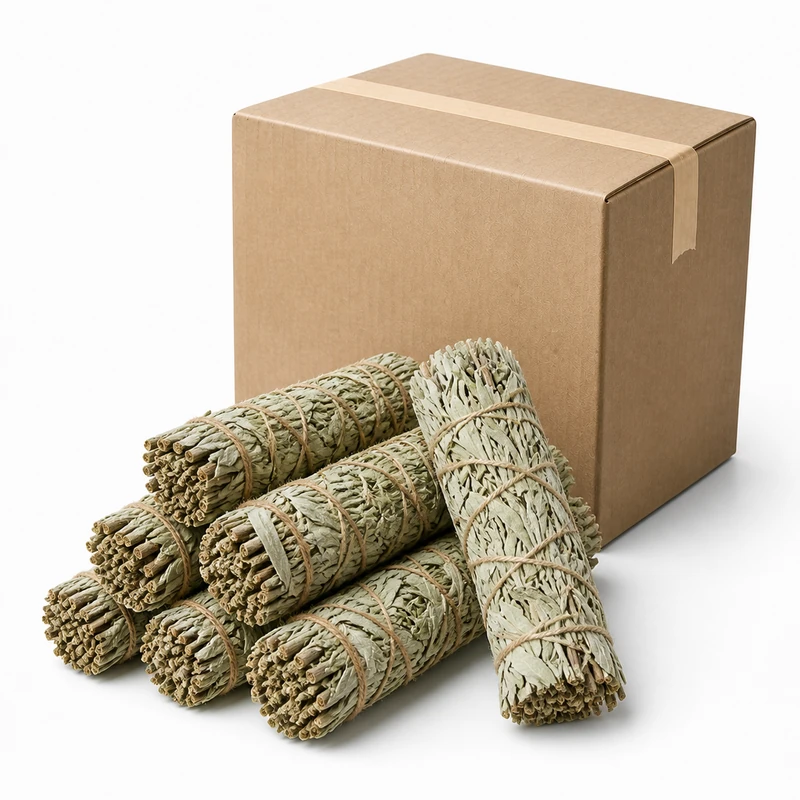
Rosemary smudge sticks offer a gentler, more herbaceous alternative to sage, with a warm, familiar aroma that appeals to people who find sage too intense. Whether you are new to smudging or looking to expand your practice, rosemary is worth exploring. Browse our full Smudge Sticks collection to see all available varieties.
Why Rosemary for Smudging?
Rosemary is one of the oldest herbs used in purification and protection rituals across European, Mediterranean, and Middle Eastern cultures. Unlike sage — which has its deepest roots in Indigenous North American traditions — rosemary’s smudging history is rooted in European folk practices, making it a meaningful choice for people seeking a purification herb connected to their own cultural heritage.
The herb contains natural volatile oils including 1,8-cineole (eucalyptol), camphor, and alpha-pinene, which produce a clean, uplifting aroma when burned. These are some of the same compounds found in eucalyptus and pine, giving rosemary smoke a refreshing quality that sage does not have.
History & Tradition
Rosemary’s use in purification and protection spans thousands of years:
- Ancient Greece & Rome — Burned in temples and homes for purification. Greek students wore rosemary garlands believing it improved memory and concentration.
- Medieval Europe — Placed in doorways and windows to ward off illness. Burned during plague outbreaks as a fumigant. Used in religious ceremonies and weddings.
- Mediterranean folk medicine — Burned in sickrooms and homes as a cleansing practice that persists in rural communities to this day.
- Modern aromatherapy — Rosemary essential oil is widely studied for its stimulating and clarifying properties, lending scientific context to traditional burning practices.
Benefits of Rosemary Smudging
Gentle, Accessible Aroma
Rosemary produces a warm, herbaceous smoke that most people find pleasant and familiar. Unlike white sage — which can be overpowering in small spaces — rosemary’s aroma is inviting without being intense. This makes it ideal for apartments, offices, or shared spaces where strong smoke might be unwelcome.
Uplifting & Energizing
Where sage is often associated with “clearing” energy, rosemary is traditionally associated with inviting positive energy, clarity, and focus. Many practitioners use rosemary when they want to feel energized and mentally sharp rather than simply cleansed.
Memory & Focus Association
Rosemary has been linked to memory and cognitive focus since ancient Greece. While smudging is a spiritual practice rather than a clinical one, many people find that burning rosemary helps create a focused, productive atmosphere — making it popular for home offices and study spaces.
Cultural Accessibility
Some people prefer not to use white sage due to concerns about cultural appropriation of Indigenous North American traditions. Rosemary offers a purification herb with deep European and Mediterranean roots, providing a meaningful alternative without cultural complications.
Pleasant Residual Scent
After burning, rosemary leaves a warm, herbal scent that lingers pleasantly in a room — similar to having fresh herbs in the kitchen. Sage, by contrast, can leave a heavier, more pungent residual smell that some people find lingering.